

Lock care guide
Van lock servicing: how to maintain your van's locks
Why van locks wear out, which lubricant to use, how often to apply it, and what's involved when a lock is professionally serviced. Written with the engineers who design, test and fit ProtectAVan security.
Free
Lock Health Check
A check-up that gets your locks ready for the winter months. Cold, wet weather is hardest on locks, so our engineers inspect each one for wear, clean it out and lubricate it before the temperature drops.
- Inspected for wear on the pins and keyway
- Cleaned and lubricated
- Advice if a lock needs more work
Full Service
Full Lock Service
A complete check of the lock, in the same way a car service is a complete check of the car. The lock is taken apart, every part is inspected, worn parts are replaced, and it's rebuilt to work with your existing key.
- All internal components removed and checked
- New springs, and new pins where worn
- Rebuilt or remade to match your key
Key takeaways
- Lock servicing keeps a lock lubricated, reduces wear and helps it keep operating at proper capacity.
- The pins and keyway wear first. Over time the key and pins wear down together.
- Use a silicone-based lubricant with PTFE. Avoid white grease and graphite.
- Lubricate every 6 weeks in summer and every 3–6 weeks in winter.
- A worn lock can usually be rebuilt to work with your existing key.
- Van locks wear faster than house locks because road grit, salt, dirty water and slush get flicked up into the cylinder.
- The same care applies to most other locks, including house door locks, garages and padlocks.
Why do van locks need servicing?
Van locks need servicing so they keep operating at proper capacity. Regular lubrication stops a lock drying out, keeps wear and tear to a minimum and increases its working life.
Every time a key is used, the metal parts inside the lock move against each other. When a lock is lubricated, those parts move freely. When it dries out, bare metal rubs against bare metal, which causes the lock to snag and catch. Left long enough, the pins can freeze up completely.
A silicone lubricant creates a barrier between these parts, which stops the metal from degrading.
This isn't unique to vans. Most everyday locks, including the cylinder locks on house front doors, garages, sheds and padlocks, work on the same principle of pins inside a cylinder. They wear in the same way, and they benefit from the same care.
Need a lock serviced?
Book a free Lock Health Check with our engineers. They'll inspect your locks, clean and lubricate them, and tell you if any lock needs a Full Service.
Book a service0333 444 2200
How does a van lock wear out?
Wear in a cylinder lock happens gradually, and in a predictable order.
The same pattern applies to most pin-tumbler locks, including the euro cylinders fitted to many uPVC and composite front doors at home.
- Dirt gets into the keyway. Over time, dirt, grit and slush from the roads get into the lock's keyway.
- The pins start to wear. The pins inside the cylinder take the most wear every time the key is turned.
- The keyway wears. The keyway, the slot the key slides into, wears along with the pins.
- The key and pins wear down together. Over time the key wears to match the worn pins.
- The lock snags and freezes up. Without lubrication, bare metal against bare metal catches, and the pins start to freeze up.
Diagram: cutaway of a cylinder lock showing pins, springs and keyway
Signs a lock needs attention
- The key snags or catches as it goes in or turns
- The lock feels stiff or needs force to turn
- A SlamLock or HookLock doesn't fire cleanly
- Pins stick, or the lock stops turning in cold weather
What lubricant should you use on van locks?
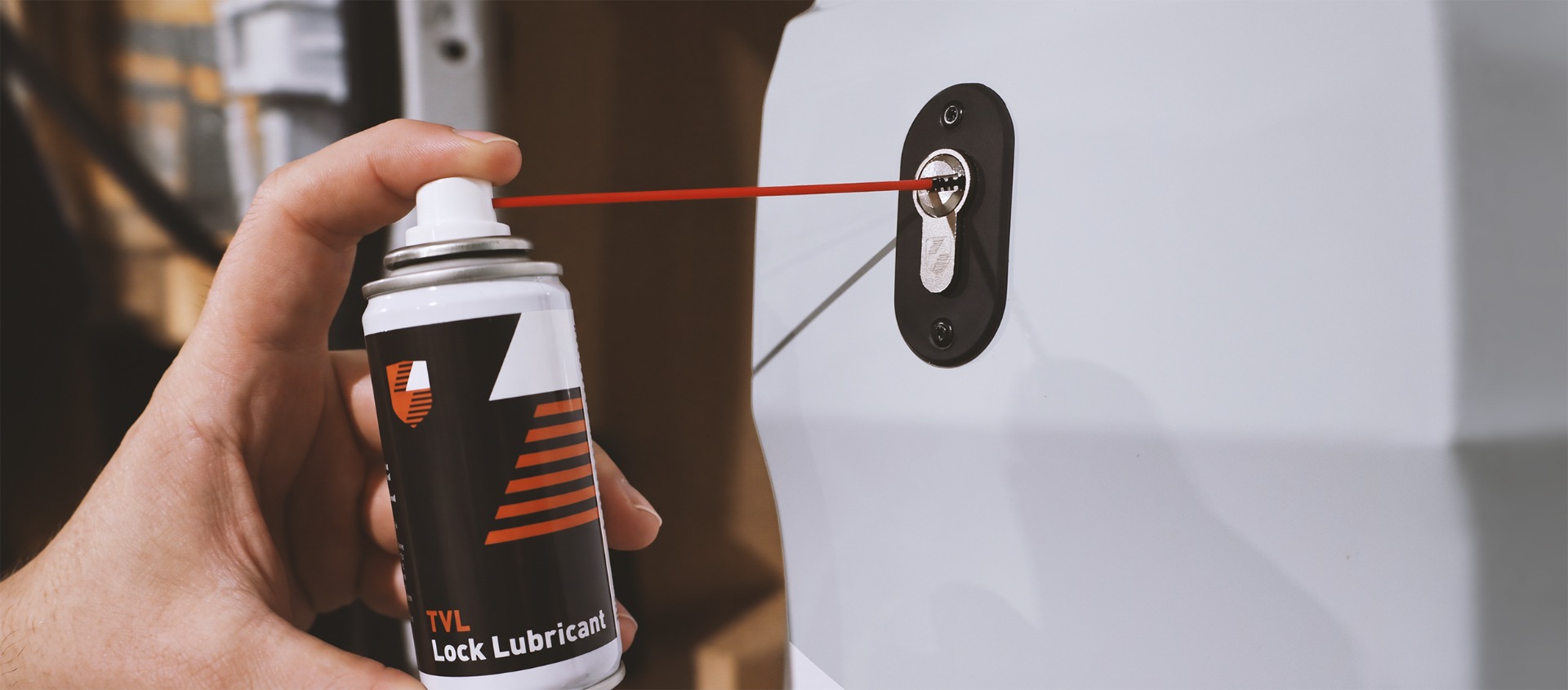
Use a silicone-based lubricant that contains PTFE. Avoid white grease and graphite.
It helps to think of it like the oil change in a car service. First, WD-40 clears out any dirt and debris that has built up inside the lock, the same way old oil is drained from an engine. Then the silicone PTFE lubricant goes in, like fresh oil. It coats the pins in a protective barrier that helps all the parts move smoothly and efficiently.

Available in our shop
TVL Security Lock Care Pack
Everything you need to service your locks between visits. The pack includes a specially formulated lock lubricant and a 300 GSM microfibre cloth for regular maintenance. Suitable for your TVL Security locks, and the same routine works for the other locks around your home and business.
- Lock lubricant for smooth operation
- Protects against wear and corrosion
- Reusable, washable microfibre cloth
Price£5.00
Buy nowThis applies to any lock, not just the ones on your van. A house door lock, a garage lock or a padlock will all benefit from the same clean-out and lubricate routine.
The silicone lubricates the lock and acts as a repellent, so dust and debris don't build up inside it. The PTFE leaves a barrier once applied that won't dry out, and won't congeal and turn to grease. Silicone also has no freezing point, so it keeps working in cold weather. Grease, by contrast, thickens up in the cold and can clog the lock.
Use
Silicone lubricant with PTFE
- No freezing point, so it keeps working in the cold
- Won't dry out, congeal or turn to grease
- Repels dust and debris
Avoid
White grease and graphite
- Congeal over time and turn to grease
- Grease thickens in the cold and clogs the lock
- Not recommended for any van lock
How often should you lubricate van locks?
Lubricate your van's locks every 6 weeks in summer and every 3–6 weeks in winter.
Cold, wet conditions are harder on locks, so they need attention more often through the winter months. Locks also need cleaning and re-lubricating after exposure to snowy slush or a car wash.
Outdoor locks at home, such as those on gates, sheds and garages, face the same weather and benefit from the same routine.
SummerEvery 6 weeks
Spray with silicone PTFE lubricant
WinterEvery 3–6 weeks
Spray with silicone PTFE lubricant
After slush or a car washAs soon as possible
Clean with WD-40, then spray with silicone
If the lock is dirtyBefore lubricating
Clean with WD-40 first, then spray PTFE in after
How to lubricate each type of van lock
The same silicone PTFE spray is used on every type of lock. What changes is where you apply it and how you work it in.

Cylinder locks
These steps also work for the cylinder lock on a house front door or back door.
- If the lock is dirty, clean it with WD-40 first.
- Spray the silicone PTFE lubricant into the lock and onto the key.
- Move the key in and out of the keyway a few times.
- Fire the lock a few times to spread the lubricant through the cylinder.

SlamLocks
- Lubricate the cylinder in the same way as above.
- Spray lubricant on the back of the cam to reduce wear and tear.

HookLocks
- Lubricate the cylinder in the same way as above.
- Spray the same lubricant onto the hook.
- Fire the lock a few times to work the lubricant into the mechanism.

ArmourShells
- Lubricate the bullet lock in the same way as a cylinder lock.
- Check around the edge of the bullet lock, where it meets the shell. Moving back and forth over time can cause the hole in the shell to wear.
What's involved in professional lock servicing?
ProtectAVan offers two levels of lock servicing: a free Lock Health Check, and a Full Service for locks that are worn.
Lock Health Check (free)
The Lock Health Check is designed to make sure your locks are prepared for the winter months, when cold and wet weather puts the most strain on them. An engineer inspects your van's locks for wear on the pins and keyway, cleans them out with WD-40 and lubricates them with silicone PTFE spray. If a lock needs more than that, they'll explain what and why.
Full Service
The Full Service is a full lock check, much like a car service. Rather than just topping up the lubricant, the engineer takes the lock apart and checks every part.
All internal components are removed from the lock. Springs are replaced, and worn pins are replaced where the wear is bad. If the chamber is worn, it's changed. If the lock is too damaged for repair, the whole cylinder is replaced and matched to your existing key.
What a Full Service involves, by level of wear
Light wear
Rebuild
Internal components removed and cleaned, and new springs fitted. You keep your current key.
Heavier wear adds
New pins + chamber
Worn pins replaced and the chamber changed. You keep your current key.
Too damaged for repair
New cylinder
The whole cylinder is replaced and remade to match your key. New key cut recommended.
When a new cylinder is fitted, we recommend having a new key cut, as an old key will already have worn down with the original pins.
Book a lock service
Start with a free Lock Health Check. Our engineers will tell you if any lock needs a Full Service.
Book a service0333 444 2200
Frequently Asked Questions
Quick answers to the most common questions on this page. If you cannot find what you are looking for, please reach out to our support team.
Servicing keeps a lock operating at proper capacity. Regular lubrication stops it drying out, keeps wear and tear to a minimum and helps it last longer.
A silicone-based lubricant with PTFE. Avoid white grease and graphite: they congeal over time, and grease thickens in the cold and can clog the lock.
Every 6 weeks in summer and every 3–6 weeks in winter. After driving through slush or going through a car wash, clean the lock with WD-40, then spray it with silicone.
It's designed to get your locks ready for the winter months. An engineer inspects each lock for wear on the pins and keyway, cleans it out with WD-40 and lubricates it with silicone PTFE spray, then tells you if any lock needs more work.
It's a full lock check, much like a car service. The lock is taken apart, springs are replaced, and worn pins and chambers are changed. If the lock is too damaged for repair, the cylinder is replaced and matched to your key.
No. A serviced or rebuilt lock works with your current key. If the whole cylinder is replaced, we recommend a new key cut, as the old key will have worn down with the original pins.
Yes. Most house door locks, garage locks and padlocks work on the same principle of pins inside a cylinder, so the same clean-out and lubricate routine applies.
Book online, or call 0333 444 2200, Monday to Friday, 7:30am to 5pm.
Book a service
Four steps from booking to serviced.
1
Get in touch
Book online or call 0333 444 2200. Tell us your van and which locks are fitted.
2
We check your locks
Our engineer inspects for wear, then cleans and lubricates each lock.
3
We explain what we found
If a lock needs a full service, we'll tell you why before any work starts.
4
Back to proper capacity
Your locks are working as they should, with the key you already have.
Look after it.
Before it locks up.
Book a free Lock Health Check, or talk to the team about a full service for a worn lock.
Book a serviceCall 0333 444 2200
Monday to Friday, 7:30am to 5pm